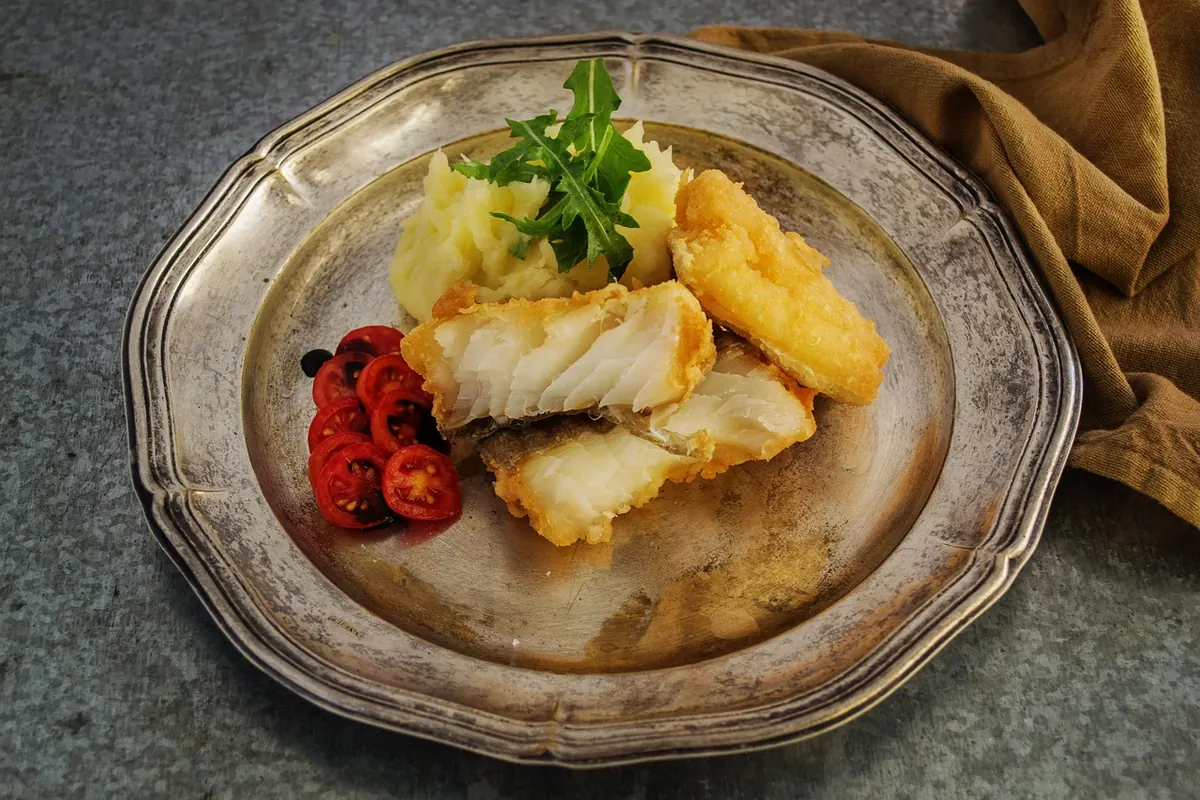
Ask for fish and chips in Edinburgh and you will get haddock unless you say otherwise. Ask in London and you will almost certainly get cod. Both fillets come out of the same fryer, wear the same golden batter, and sit behind the same glass counter. Yet the two fish behave quite differently on the plate. Cod is mild, soft and generous; haddock is firmer, a little sweeter, and better at holding its shape. Neither is the correct answer. Which one is better depends on what you want from the bite, what the shop has in that day, and where in the country you happen to be standing.
Flavour: A Mild Canvas or Something With an Opinion
Cod is the diplomatic choice. Its flesh is clean and gently sweet, with a buttery quality when it is really fresh. That neutrality is the point: cod lets the batter, the vinegar, the tartar sauce and the mushy peas do the talking. If you like a fish that does not compete with anything else on the tray, cod is your order.
Haddock tastes more like itself. Lots of people describe a sweeter, slightly nutty note and a flavour that lingers a bit longer in the mouth. It is not a strong fish by any means, but it has an opinion. A squeeze of lemon and a shake of salt are usually all it needs.
Here is the thing worth remembering: freshness beats species every time. A cod landed this week and fried properly will out-taste a tired haddock that has been sitting in the display case. Cold-water fish also vary through the year, and a thick fillet from a well-fed winter fish eats very differently from a thin summer one. Ask what came in today before you decide anything else.
Texture and How Each Fish Handles the Batter
Cod separates into large, distinct flakes. It is soft, almost creamy, and it tears apart under a fork with very little effort. That delicacy is also its weakness. Overcook it, or let it sit under a heat lamp while the chips finish, and it goes from silky to watery and collapsing.
Haddock has a finer flake and a firmer bite. It holds together better in the fryer, in the paper, and on the walk home. The flesh is a touch denser, which means it stands up to a thick, crunchy batter without turning to mush underneath. Haddock also often arrives skin-on, which adds flavour and helps the fillet keep its shape.
- Cod: big soft flakes, mild and buttery, brilliant when fresh and unforgiving when overcooked.
- Haddock: firmer, finer flake, slightly sweeter, holds its shape well in transit.
- Both: best eaten within minutes of leaving the fryer. Steam is the enemy of crisp batter, so open the paper.
What Actually Drives the Price
Fish prices move with the boats, not with the menu, so it is pointless to promise that one species is always cheaper. In some towns haddock sits a little above cod; in others the reverse is true. What matters more is what you are getting for the money.
A cheap fillet is usually a thin one, a tail end, or a smaller fish, and thin fillets overcook in seconds. A thick middle-cut portion costs more and eats far better. Ask the fryer how thick the fillets are today and whether the fish is fresh or frozen at sea, which is a legitimate and often very good way of preserving quality.
It also pays to read the menu closely. In some shops "rock" or "rock salmon" is dogfish, not cod, and pollock is sometimes offered as a cheaper white fish. None of that is dishonest, but you should know what you are ordering. A good counter will tell you the species without hesitating.
Sustainability: Look Past the Species Name
Cod has a complicated history. North Sea stocks went through a long crisis and their status has swung between recovery and concern since. Haddock from the north-east Atlantic is generally regarded as being in healthier shape, which is one reason some shops steer customers towards it.
The trouble with picking a fish by name alone is that the same species can come from a well-managed fishery in one sea and a struggling one in another. Cod from the Barents Sea or Icelandic waters is often cited as a better choice than cod from parts of the North Sea, and haddock varies too.
A few practical things you can do:
- Look for the blue MSC label on the menu or the counter, which indicates the fishery has been independently assessed.
- Check the Marine Conservation Society's Good Fish Guide if you want a quick rating before you go out.
- Ask where the fish was caught and how. Line-caught, or frozen at sea on a well-run boat, tells you something.
- If the answer is a shrug, treat that as information in itself.
Regional Loyalties, and Why They Matter to Your Supper
In Scotland and much of the north-east of England, haddock is the default. Order "fish and chips" in Glasgow or Aberdeen and you will be asked nothing further. In London, the south, and most of England, cod holds the crown. Across the Atlantic, New England chippers serve both, with cod usually the standard and haddock close behind.
There is a real advantage to ordering the local favourite. A fryer who cooks haddock two hundred times a week knows exactly how that fillet behaves, how long it needs, and how thick the batter should be. Ordering the fish the shop cooks most often usually gets you the best version of that shop's cooking, and there is no shame in following the crowd.
The accompaniments shift with the region as well: beef dripping in some northern shops, vegetable oil in others, salt and sauce in Edinburgh, salt and vinegar almost everywhere else. Match your fish to the local style and you will rarely be disappointed.
How to Choose at the Counter
If you are still undecided, run through this before you order:
- Want a clean, mild flavour that lets the batter and vinegar lead? Order cod.
- Want a firmer bite and a fish with a bit more character? Order haddock.
- Both on offer? Ask which one came in fresher. Fryers know, and most will tell you honestly.
- Trying to compare them properly? Do it on two separate visits, not one. Buy one of each and the second fillet steams in its paper while you eat the first.
- Shop quiet? Ask for your fish to be cooked to order. A fillet that has been resting under the lamp loses its crust and turns heavy.
There is no losing answer here. The best fish is a fresh one, from a fishery that is being looked after, fried by someone who cares, and eaten within a few steps of the door. Pick according to your mood, trust the shop, and order the local favourite when you are somewhere new. If a health condition means you are keeping an eye on fried food, that is a conversation for your GP or dietitian rather than the queue at the counter.
Photo: DanielaElenaTentis / Pixabay