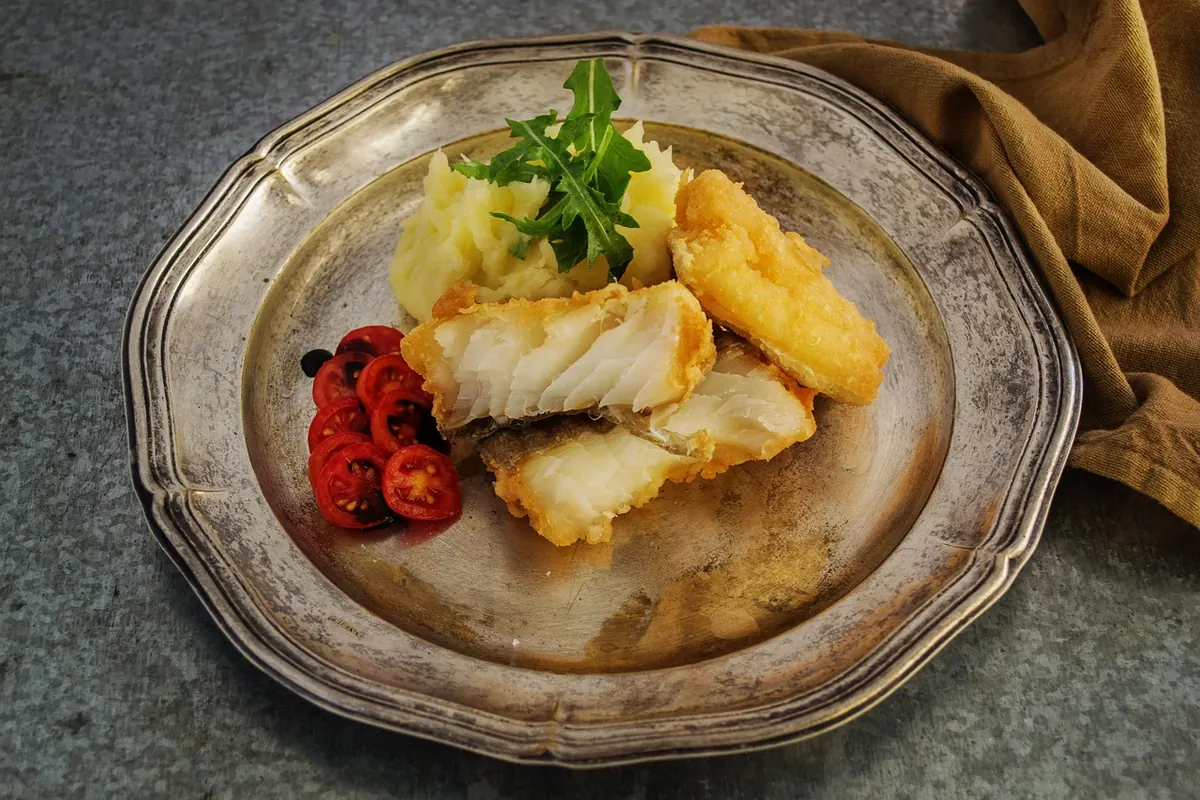
Fish and chips is one of the few British takeaway classics that survives a gluten-free diet almost intact. The fish is naturally gluten-free. The potatoes are naturally gluten-free. Only two things stand in the way: the batter, and the oil it cooks in. Sort those out and you get the whole experience — a shattering golden shell, steaming cod, chips soaked in vinegar.
Sort them out badly and you get a pale, greasy fillet that slides off the fish, plus a night you would rather forget. Here is how to make it work in your own kitchen, and how to judge whether the shop down the road can be trusted.
Why Gluten-Free Batter Behaves Differently
Wheat flour does two jobs in a traditional batter. The starch crisps, and the gluten forms a stretchy web that traps bubbles and holds the coating onto the fish. Take the gluten away and you lose the scaffolding. The result, with a straight swap of plain gluten-free flour, is usually a thick paste that drinks oil, browns before it cooks through and slips off in one sad sheet.
The fix is not one clever ingredient but three: flours that crisp well, a binder to replace some of the structure, and carbonation for lift.
- Rice flour — light, neutral and reliably crisp; the backbone of most good gluten-free batters.
- Cornflour (cornstarch) — adds the brittle, glassy crunch you want on the edges.
- Potato starch or tapioca starch — softens the mix so it clings instead of cracking.
- Xanthan gum or psyllium husk — the binder. Without it, the coating flakes off in the fryer.
- Sparkling water or gluten-free beer — bubbles expand in hot oil and keep the shell thin.
A Reliable Gluten-Free Batter
Ingredients
- 100g white rice flour
- 50g cornflour
- 25g potato starch or tapioca starch
- 1 tsp xanthan gum (or 2 tsp psyllium husk)
- 1 tsp gluten-free baking powder
- ½ tsp fine salt, plus a pinch of sugar for colour
- 200–220ml very cold sparkling water or gluten-free beer
Method
- Whisk the dry ingredients together thoroughly. Any lump of xanthan gum will turn into a gluey streak later.
- Pour in the cold fizzy liquid gradually, whisking until the batter coats the back of a spoon like double cream. Slightly thinner than you think — thick batter means a doughy middle.
- Rest it for ten minutes, then loosen with a splash more fizzy water if it has tightened up. Use it within about twenty minutes; it thickens and gets sticky as it sits.
- Pat the fish completely dry and season it. Dust the fillets lightly with cornflour or rice flour — this dry layer gives the batter something to grip.
- Heat oil to roughly 175–180°C. Gluten-free batter colours faster than wheat batter, so if it is browning within thirty seconds, drop the heat slightly and cook a little longer.
- Dip the fish, let the excess drip off, then lower it into the oil away from you. Hold it under for a second or two so the batter sets before you let go.
- Fry in small batches. Crowding the pan drops the oil temperature and you end up with soggy coating.
- Drain on a wire rack, never on kitchen paper. Paper traps steam and softens the underside.
For a thicker shell, dip the fish twice with a brief pause in between. For chips, blanch them at around 130°C until soft, rest, then fry at 180°C until crisp. Cook the chips before the fish if you are using one pan — fish batter leaves debris that burns.
Cross-Contamination at Home
This is where most home attempts fall apart, and it has nothing to do with the recipe. If your fryer, oil, tongs, rack or chopping board has had wheat batter in it, the gluten-free version is not gluten-free.
Keep a separate small pan or fryer for gluten-free frying if you cook both. If you only have one, fry the gluten-free batch first in fresh oil, and only then cook anything with wheat flour. Flour dust on the worktop, on your hands and on tea towels is easy to miss; wipe down before you start, and use clean utensils rather than the ones you just used for the other batch.
Never fry gluten-free fish in oil that has already cooked battered fish or battered sausages. Batter particles stay in the oil and end up on your food.
What to Ask Before You Order
Chip shops vary enormously. Some run a genuinely separate fryer and a proper gluten-free batter; others have good intentions and one shared pan. A short phone call before you go saves a wasted trip, and it is fairer on staff than turning up at seven on a Friday and asking them to stop service.
- Do you have a dedicated fryer and dedicated oil for gluten-free orders?
- Are the chips cooked in that same dedicated fryer, or in the one used for the battered fish?
- Which batter do you use, and is it labelled gluten-free?
- Do you dust the fish in ordinary flour before battering it?
- Do you use separate tongs, baskets, trays and paper for gluten-free orders?
- Is your vinegar malt vinegar? Malt vinegar is made from barley, so ask for a gluten-free alternative or bring your own.
- What is in the curry sauce, gravy and mushy peas? Curry sauce and gravy are often thickened with wheat flour.
- Is there a quieter time I could come, so it can be cooked to order?
If the answers are vague, treat that as a no. A dedicated fryer is not a nice extra; it is the whole answer.
Chips, Vinegar and the Rest of the Order
Chips are just potatoes, oil and salt, which is why they are so often assumed to be safe. Check two things: that they have not been dusted with flour to help them crisp, and that they were not fried alongside battered fish. Both happen.
Then work through the extras. Batter scraps are obviously out. Tartare sauce and ketchup are usually fine but worth checking once. Gravy and chip-shop curry sauce are the common traps. If you are cooking at home, the same rules apply to frozen chips and oven chips, which sometimes carry a wheat-based coating.
A Practical Way to Start
Make the batter once with rice flour, cornflour and a little starch, and write down what you changed. Most people need one attempt to get the consistency right and then it becomes routine. Buy your fish fresh that day, dry it properly, and keep the oil clean.
On the shop side, ring ahead, ask the questions above, and go when they are not slammed. If you have coeliac disease or a wheat allergy, small traces matter, so follow the advice from your GP or dietitian over anything a takeaway assures you of — and if the answer to the fryer question is anything other than a clear yes, order something else.
Photo: Иван Григорьев / Pexels