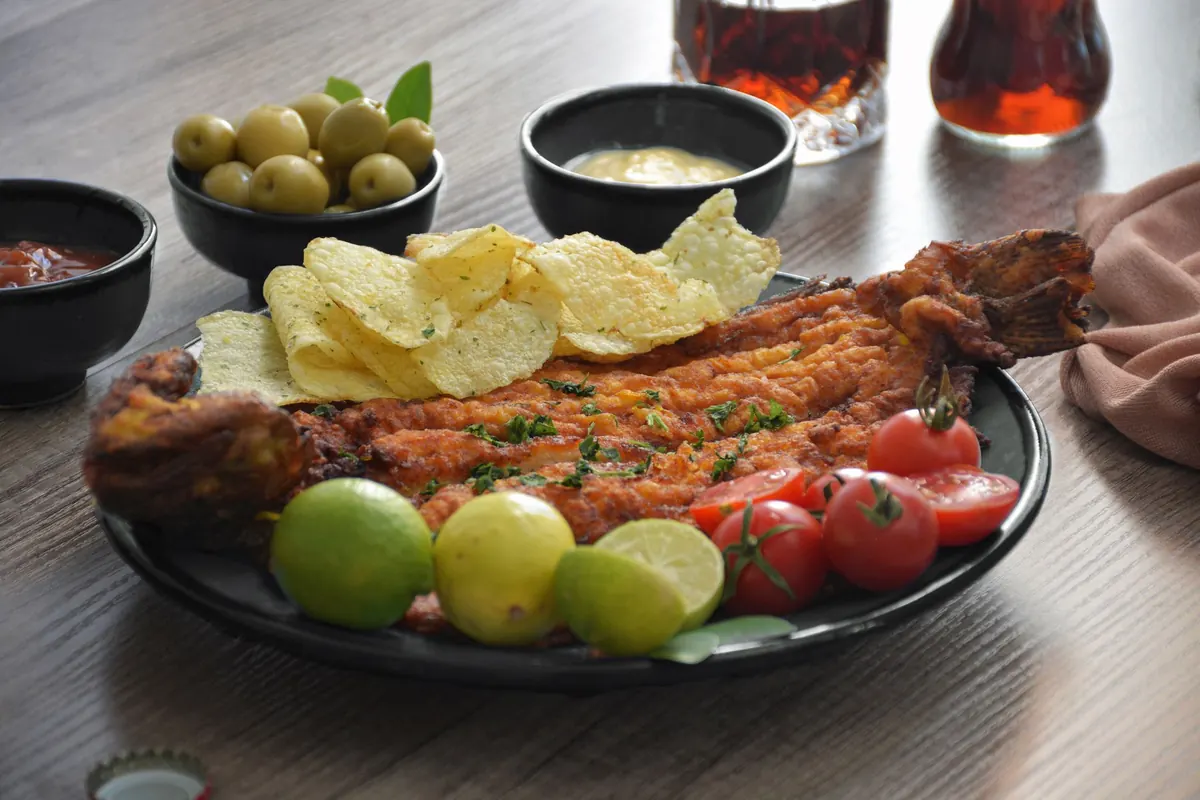
Fish and chips is a texture problem before it is a flavour problem. The fish should crackle when a fork goes through it; the chips should be fluffy in the middle with a shell that holds together. A deep fryer makes that easy, but it is not the only route. With a heavy baking tray, an air fryer, or a deep saucepan holding a couple of centimetres of oil, you can get very close at home — and you will not be left with four litres of spent oil to deal with.
Why You Do Not Need a Deep Fryer
Deep frying works for two reasons: hot oil moves heat quickly and evenly, and it sets the batter before it can soak into the fish. The important things are enough heat and a dry surface. Neither requires submerging anything.
Each method has its own personality. Oven baking gives a crisp, slightly biscuity shell and the least mess. An air fryer is quicker and excellent with crumb coatings, though wet batter needs handling. Shallow frying in 2cm of oil is the closest to a chippy — the batter puffs, browns and stays glassy — and it uses a fraction of what a fryer would.
Start With the Potatoes
Floury potatoes give you the fluffy centre. Maris Piper, King Edward, Russet and Yukon Gold all behave well; waxy salad potatoes turn gluey. Cut them into chips about 1.5cm thick. Thicker than that and the middle stays raw before the outside colours.
- Rinse the cut chips under cold water until it runs clear, then dry them thoroughly.
- Parboil in generously salted water for 5–7 minutes, until the edges soften but the centre still resists a knife.
- Drain, then leave in the colander for 5 minutes so the steam escapes.
- Toss gently to rough up the surfaces. Those scuffed edges are where crispness lives.
If you have time, spread them on a tray and chill for 20 minutes, or freeze them. Cold, dry surfaces fry better.
A Batter That Crunches Without Deep Frying
For two large fillets, whisk 100g plain flour with 1 tbsp cornflour, 1 tsp baking powder and a good pinch of salt. Add about 150ml of very cold liquid — sparkling water, lager, or half water and half milk — and stir until just combined. Lumps are fine. Over-mixing develops gluten and gives you a chewy shell.
The cornflour keeps it crisp, the baking powder lifts it, and the cold liquid delays absorption so the batter sets fast. Aim for the consistency of double cream. If it thickens while you work, loosen it with a splash more liquid.
Pat the fish bone dry with kitchen paper, season it, then dust it lightly with flour. That dusting gives the batter something to grip, and skipping it is the most common reason a coating slides off in the pan.
The Oven Method
Heat the oven to 220°C (200°C fan). Put a sturdy baking tray in with 3 tbsp of rapeseed or vegetable oil and let it get properly hot — ten minutes at least.
For the chips, toss the parboiled potatoes with 1 tbsp oil and salt, tip them onto the hot tray in a single layer, and roast for 30–35 minutes, turning every ten. Crowding steams them, so use two trays if you have to.
For the fish, pull the tray out, lay the battered fillets onto the hot oil so they sizzle, and bake for 12–15 minutes, flipping once. The oil beneath each fillet is doing the work of a fryer, which means the base crisps instead of sticking.
The Air Fryer Method
Air fryers handle chips beautifully. Toss the parboiled, dried chips with 1 tbsp oil and cook at 200°C for 15–20 minutes, shaking the basket every 5 minutes. Thin chips cook faster; thick ones need the full time.
Wet batter is trickier here, because moving air can push it off the fish before it sets. Two fixes work. Either freeze the battered fillets for 15 minutes so the coating firms up, or skip the batter and use a crumb: flour, then egg, then panko with a little oil drizzled through it. Cook the fish at 190°C for 10–12 minutes and resist shaking the basket.
The Shallow-Fry Method
This is the one that tastes like the real thing. Use a deep, heavy saucepan or a wok and pour in 2cm of oil — groundnut, rapeseed or sunflower. Heat it to 175°C. A cube of bread should brown in about 30 seconds.
Fry the chips first, in small batches, for 4 minutes until pale and soft, then drain. Raise the oil to 190°C and fry them again for 2–3 minutes until golden. Keep them warm in a low oven while you cook the fish.
Hold each fillet by the tail, dip it in the batter, let the excess drip for a second, and lower it into the oil away from you. Fry 3–4 minutes per side. Two fillets at a time, maximum — every addition drops the oil temperature.
Keep a lid within reach, never leave the pan, and never add wet fish to spitting oil. If you are frying for a crowd, change the oil rather than pushing tired oil too far.
Serving, Salt, and the Last Five Minutes
Salt the moment things come out of the heat, while the surface is still tacky. Salt later and it slides off onto the plate.
Serve on warm plates with malt vinegar, tartare sauce, mushy peas or a lemon wedge. Everything here is best eaten within ten minutes. A low oven at 100°C will hold the chips, but the fish will soften.
If the fish arrives soggy, the oil was too cool, the batter was too thick, or the fillets went in wet. If the chips are pale and limp, they needed longer at the parboil stage, more drying, or a hotter oven.
One last thing: an inexpensive digital thermometer removes most of the guesswork from all three methods. Check the oil, check the oven, and trust the reading over the clock.
Photo: Pegah Sharifi / Pexels